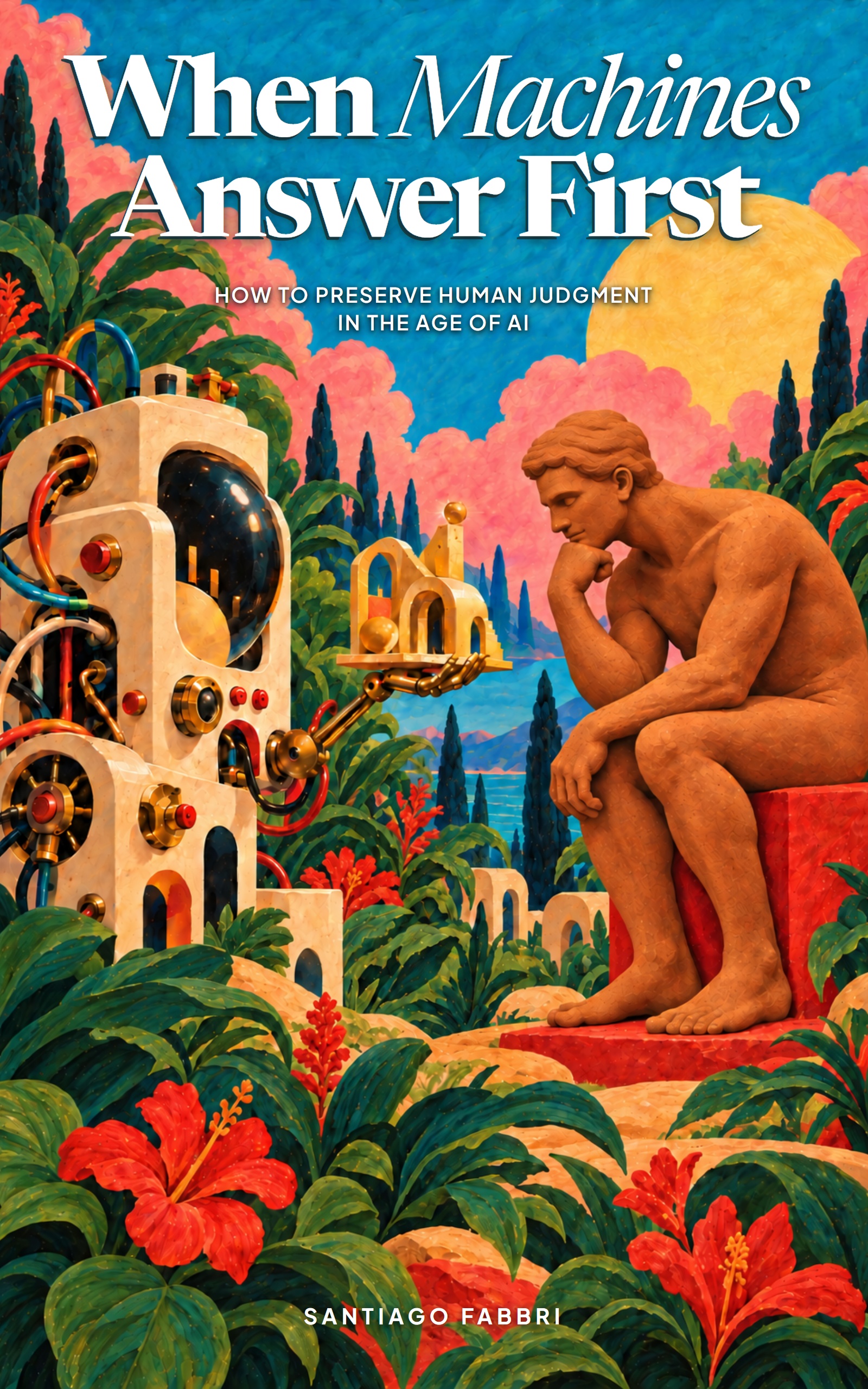
What happens to human judgment when automated systems answer before we undertake the labor of framing the problem? Today, generative AI delivers fluent conclusions in fractions of a second. But human judgment is not a downloadable commodity; it is built through the generative friction of unassisted thought. Drawing upon empirical trials in cognitive ergonomics, aviation investigations, and decision science, this volume provides actionable protocols to preserve intellectual sovereignty in an automated age.
The Published Books
How do human beings think, deliberate, and create when certainty is unavailable?
Thinking Session books are produced with collector-grade archival care. Our catalog unites inquiries on cognitive clarity, attentional architecture, and deep studies of consequential minds at work.
The Imprint Catalogue
Explore each book’s complete intellectual scope, interactive decision pauses, and chapter architecture.
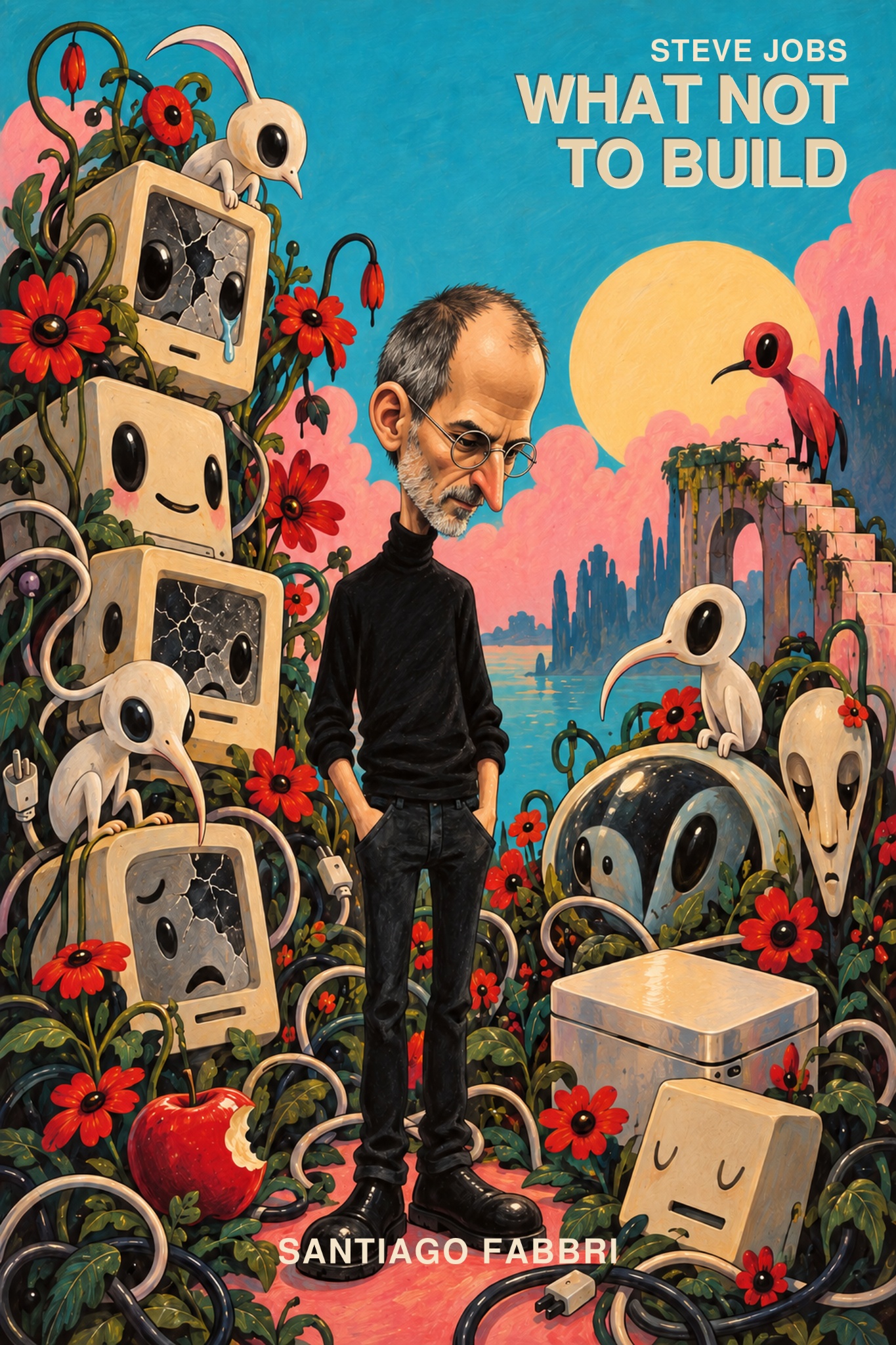
Most leadership books tell you what to do. Steve Jobs’s greatest breakthroughs came from deciding what not to do. Reconstructing primary corporate filings, engineering patents, recorded demonstrations, and pushback from designers including Wozniak, Atkinson, Catmull, and Ive, this book investigates subtraction as a contested, high-stakes intellectual discipline.
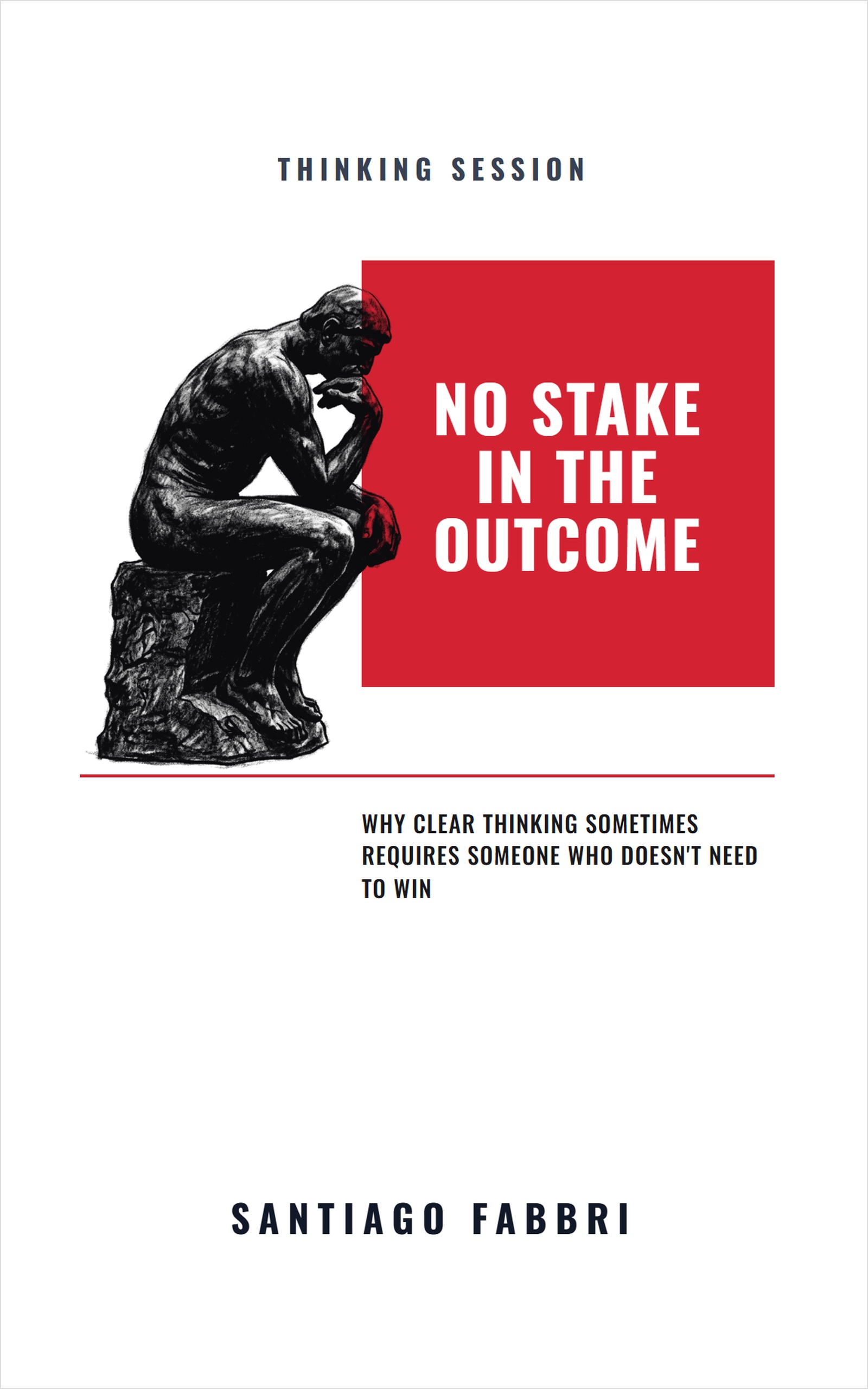
No Stake in the Outcome
Why Clear Thinking Sometimes Requires Someone Who Doesn't Need to Win
When advisors, colleagues, or friends have an interest in what you decide, their counsel unconsciously narrows your options. Santiago introduces the discipline of the unstaked conversational clearing—an intellectual space where thinking is articulated without borrowed agendas or advice contamination.
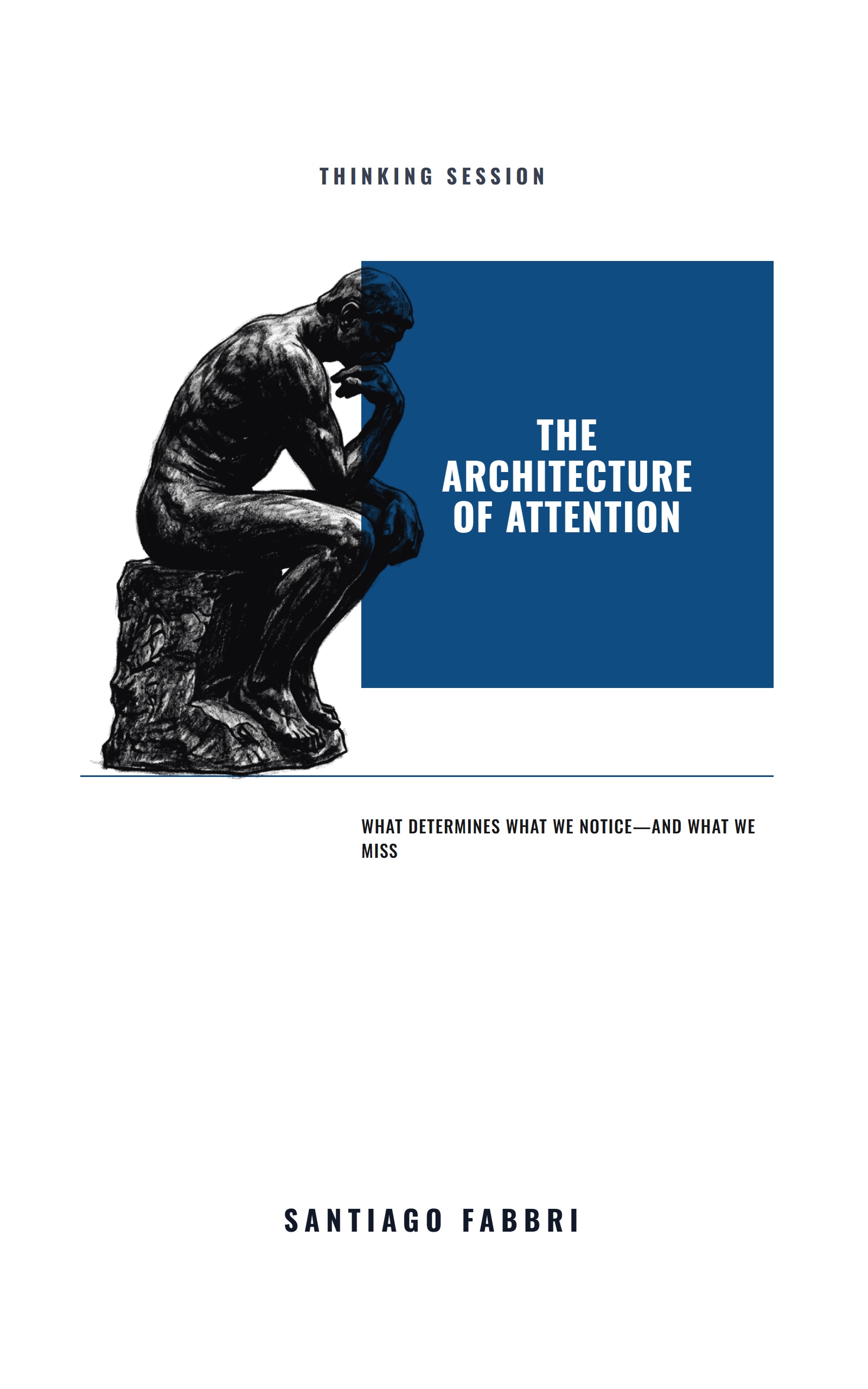
Reasoning is downstream of attention. Perfect logic applied to distorted inputs still produces poor judgment. Moving upstream to the perceptual gateway that precedes all conscious deliberation, this book provides a rigorous framework for diagnosing cognitive blind spots and reclaiming attentional sovereignty.
Field Notes from the Books
Every article published in our editorial journal is directly tied to the inquiries and paradoxes explored in these books.